Ishan Maharjan
LalitpurtoOdense
MSc Software Engineering, September 2025 intake
His bank statements were from three different dates. SIRI wants them from one. Fixed before lodging, approved in 5 weeks.
- Money file
- Second check
- After bachelor's
4.7 on Google from 1,148 reviews
Studying in Denmark from Nepal costs about Rs 33 lakh to Rs 50 lakh for the first year. You show DKK 7,426 a month for living costs (up to DKK 89,112), pay a DKK 3,060 permit fee, and can work 20 hours a week in term, full-time in summer. Last year 59 of our 64 Denmark permit files were approved.
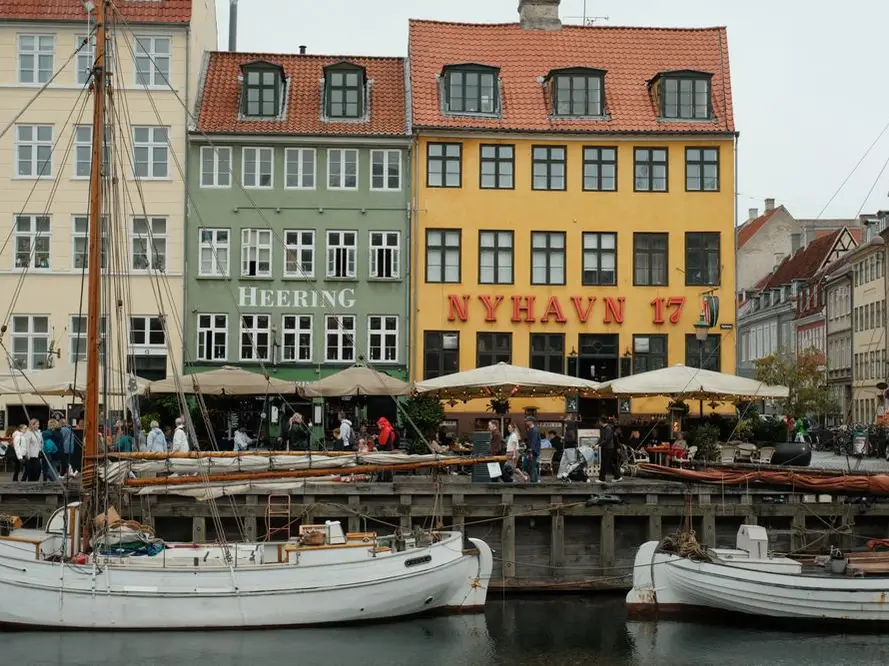
At a glance
Study in Denmark
KTMKathmandutoCPHCopenhagen
At Rs 22.93 per DKK, Nepal Rastra Bank, 18 Oct 2026.
Our own figures for FY 2025/26 (Shrawan 2082 to Asar 2083). Every number is from our files, not an estimate.
Our proof
Different marks, gaps and budgets. Each one starts the same way: a free call and an honest read of the file.
LalitpurtoOdense
MSc Software Engineering, September 2025 intake
His bank statements were from three different dates. SIRI wants them from one. Fixed before lodging, approved in 5 weeks.
DangtoHorsens
Academy Profession degree in Construction Technology, September 2025 intake
Straight from +2 with a modest budget. A 2-year profession degree in a smaller city made Denmark affordable.
KathmandutoCopenhagen
MSc Business Administration and Innovation, September 2025 intake
Admitted in Denmark and the Netherlands. We kept both files moving and put the costs side by side so she could choose.
The essentials
Denmark suits students who learn by doing: small classes, group projects, and close links to companies. Part-time pay is among the best in Europe, and you can work full-time from June to August.
It isn't cheap. Tuition for non-EU students is real, Copenhagen rent is high, and SIRI checks the money carefully.
The table has the numbers. The process and permit section shows every step.
| Tuition | About DKK 45,000 to 120,000 a year (about Rs 10.3 lakh to Rs 27.5 lakh); professional bachelor's are usually at the lower end. |
|---|---|
| Living funds for the permit | DKK 7,426 for each month of study, up to DKK 89,112 for 12 months (2026). A paid first semester of tuition also counts as proof. SIRI |
| First-year cost | About Rs 33 lakh to Rs 50 lakh: tuition, living funds, the DKK 3,060 permit fee and your flight. |
| Entry after +2 | Academy profession (AP) degrees and professional bachelor's accept a strong +2 with English; some ask for maths at a set level. |
| Entry after a bachelor's | A related bachelor's with good marks for a master's; top-up bachelor's after a relevant diploma. |
| English score | IELTS 6.5 for most degrees (6.0 for some AP degrees), or the TOEFL equal. |
| How you apply | optagelse.dk for bachelor's and AP degrees (deadline usually 15 March); university portals for master's (often 1 January to 1 March). |
| Work while studying | 20 hours a week in term (counted as 90 hours a month), full-time June to August. |
| Stay after study | An establishment card lets graduates stay and look for work. Check the current length with SIRI. |
Living in Denmark
Housing is the hardest part of Denmark, especially in Copenhagen. Start looking the day you're admitted.
| City | Rent (room) | Food | Transport and phone | Total a month | In rupees |
|---|---|---|---|---|---|
| Copenhagen | DKK 4,500 to 6,500 | DKK 2,500 to 3,000 | DKK 600 to 800 | DKK 8,000 to 10,500 | Rs 1.83 to 2.41 lakh |
| Aarhus | DKK 3,800 to 5,200 | DKK 2,400 to 2,900 | DKK 500 to 700 | DKK 7,000 to 9,000 | Rs 1.61 to 2.06 lakh |
| Odense | DKK 3,300 to 4,800 | DKK 2,300 to 2,800 | DKK 450 to 650 | DKK 6,500 to 8,500 | Rs 1.49 to 1.95 lakh |
| Aalborg and Horsens | DKK 3,100 to 4,400 | DKK 2,300 to 2,800 | DKK 400 to 600 | DKK 6,300 to 8,000 | Rs 1.44 to 1.83 lakh |
You can work 20 hours a week in term and full-time from June to August. Denmark has no statutory minimum wage, but collective agreements keep pay high: the jobs students do usually pay about DKK 130 to 150 an hour.
Cleaning, food delivery, warehouses, restaurants and hotels are the common first jobs; Danish helps with everything else. At 20 hours a week, many students cover most of their living costs after the first few months.
Working more than 20 hours in a term week breaks your permit conditions. SIRI and the tax authority share information, so the hours show up.
Denmark is short of engineers, IT specialists, health professionals and skilled workers. The positive list and the Pay Limit Scheme are the main work routes after study. Danish isn't always required in tech and engineering, but it widens your options a lot.
The Nepali community is small but active, mostly in Copenhagen and Aarhus. Danish classrooms are informal and flat: you're expected to disagree with your teachers in a group discussion. Cycling is how most people get around.
Winters are dark and wet rather than very cold. Prices are high, so cooking at home matters.
Book your free counselling. We'll understand your goals, then explain every step and every fee, clearly. Not helpful? Walk away anytime, no pressure.
Our Denmark counsellor will call you within 2 hours.
Prefer to talk now? Call +977 1-5900000 or message us on WhatsApp.
Booked
An expert will call you on within 2 hours. Keep your phone close.
Can't wait? Message us on WhatsApp
The process
Plan for 7 to 9 months from first call to flight for a September start. SIRI processing and housing are the slowest parts, so we apply for the permit the day you're admitted.
October to December
November to December
November to February
January to March
April to June
April to June
Within 14 days of applying
June to August
2 weeks before you fly
First week in Denmark
For a degree in Denmark you apply for a residence permit for higher education with the Danish Agency for International Recruitment and Integration (SIRI), using form ST1, after you're admitted.
| What | Detail |
|---|---|
| Where you apply | Online with SIRI, then biometrics within 14 days at a Danish mission or its service provider |
| Fee | DKK 3,060 (2026), paid before you apply |
| Money | DKK 7,426 a month, up to DKK 89,112 for 12 months, or a paid first semester of tuition |
| Tuition | Proof of payment as your university asks |
| Work | 20 hours a week in term, full-time June to August |
| Processing | Often 1 to 2 months; apply early |
SIRI doesn't accept crypto or money that only arrived the day before. If you show more than one bank statement, they must be from the same date. Check the current rules on SIRI.
Our fee sits in the same table as every government and university fee, so nothing turns up later.
| Fee | Amount | Paid to | When | Refundable? |
|---|---|---|---|---|
| First counsellingOur fee | Free | Prasthan Education | Before you apply | Not applicable |
| IELTS | Rs 36,000 | IDP or British Council | Before applying | No |
| Application file (our fee)Our fee | Rs 20,000 per file | Prasthan Education, by bank | When you sign the contract | Rs 10,000 back if the permit is refused, unless information was hidden from us |
| No Objection Certificate (NOC) | Rs 2,000 | Ministry of Education, Science and Technology | Before paying tuition | No |
| First-semester tuition | About DKK 22,000 to 60,000 | University | Before the permit | Per the university's policy if the permit is refused |
| Residence permit (SIRI) | DKK 3,060 (about Rs 70,000) | SIRI | Before applying | No |
| Biometrics service fee | Set by the service provider | Service provider | At the appointment | No |
| Flight | About Rs 1 lakh to 1.5 lakh one way | Airline | After the permit | Depends on the ticket |
What to collect, stage by stage. We check every page before it goes anywhere.
Each step above has its own guide, written by a counsellor and checked against the official source.
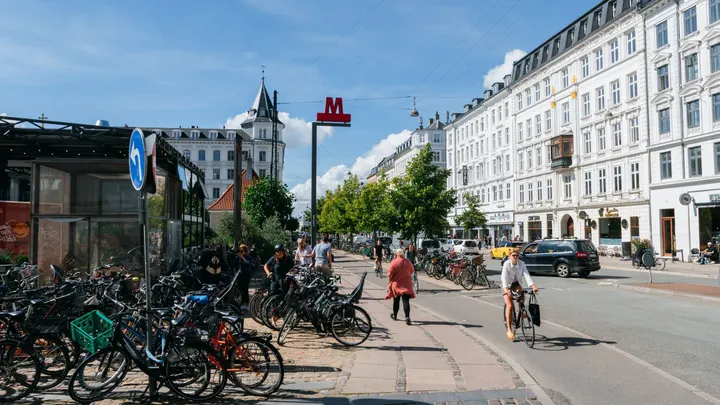
Money
Denmark from Nepal costs about Rs 33 to 50 lakh for year 1: tuition, the DKK 7,426 a month funds rule, the DKK 3,060 permit fee, rent by city and part-time pay.
4 min readUpdated
What happens after
Register for your CPR number (your key to healthcare, banking and jobs), collect your health card, open a bank account and get your tax card. Your counsellor calls you within 7 days of landing.
Danish teaching expects you to prepare before every class and to work in groups. Students who take 20 hours of work from week 1 and skip group meetings fall behind quickly. Use the summer for full-time work, and keep term hours for study.
Graduates can stay and look for work on an establishment card. Once you have a job offer that meets the rules, you move to a work permit. Danish helps, and Denmark's job portals list English-language jobs in tech and engineering.
The same counsellor stays with you until you graduate: permit renewals, tax questions, housing problems or changing programme.
Be honest with yourself
Good fit
An honest note
You should know what the university pays us. Some Danish institutions pay agents a commission and many don't. Either way, ours is written into your contract, so you can judge whether our advice is about your future or our commission.
About Rs 33 lakh to Rs 50 lakh for the first year: tuition of DKK 45,000 to 120,000, living funds of up to DKK 89,112, the DKK 3,060 permit fee and your flight. At Rs 22.93 per DKK (18 October 2026).
DKK 7,426 for each month of study, up to DKK 89,112 for 12 months (2026). A paid first semester of tuition also counts as documentation. See SIRI.
Yes: 20 hours a week in term (counted as 90 hours a month) and full-time from June to August. Pay is set by collective agreements, usually DKK 130 to 150 an hour in student jobs.
No. Students from outside the EU pay tuition, usually DKK 45,000 to 120,000 a year. A few government scholarships exist, and some institutions offer partial waivers.
Yes, mainly through academy profession (AP) degrees and professional bachelor's, which accept a strong +2 with English. Some ask for maths at a set level. Rabin went this way.
Often 1 to 2 months after you give biometrics. Apply as soon as you're admitted, because housing for September fills up fast.
Graduates can apply for an establishment card to stay and look for work. Check the current length and rules with SIRI.
Still unsure?
Book your free counselling. We'll understand your goals, then explain every step and every fee, clearly. Not helpful? Walk away anytime, no pressure.
Our Denmark counsellor will call you within 2 hours.
Prefer to talk now? Call +977 1-5900000 or message us on WhatsApp.
Booked
An expert will call you on within 2 hours. Keep your phone close.
Can't wait? Message us on WhatsApp